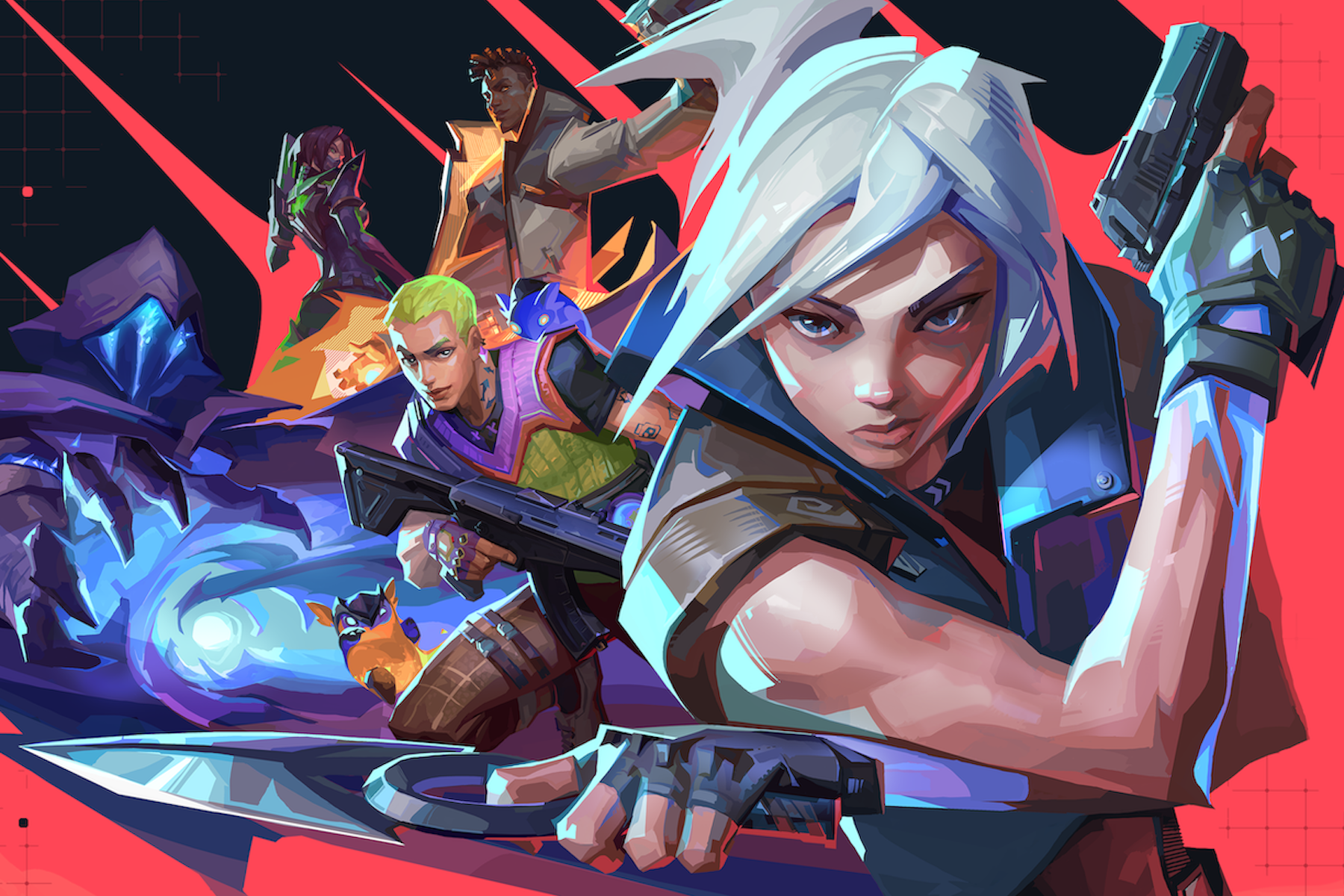



Introduction to Valorant
Valorant has evolved from a tactical shooter into a global competitive phenomenon shaped by skill, identity, pressure, community, and modern gaming culture.
For years, competitive online shooters followed predictable patterns.
A new title launched.
Players rushed in.
Streamers created hype.
The player base exploded for a few months.
Then the excitement faded.
Most games never survived beyond that cycle.
But Valorant somehow broke the pattern.
What started as another tactical FPS slowly transformed into something much larger — a digital ecosystem where competition, personality, strategy, entertainment, and social identity all merged together. Today, millions of players across the United States and around the world log in daily not just to “play a game,” but to improve, compete, socialize, and experience the emotional intensity that only a few multiplayer titles can consistently deliver.
That transformation didn’t happen accidentally.
And understanding why Valorant became one of the top games in the world right now reveals something much bigger about modern gaming itself.
Deep Analysis: Why Valorant Became So Popular
The success of Valorant cannot be explained by graphics alone.
Or esports.
Or streaming culture.
Or competitive rankings.
Its dominance comes from how effectively it combines several psychological and social factors into one experience.
At its core, Valorant creates emotional investment.
That investment begins with tension.
Unlike many modern shooters that overwhelm players with explosions, fast respawns, and nonstop movement, Valorant slows players down. Every footstep matters. Every angle becomes dangerous. Every decision can determine the outcome of an entire round.
That pressure changes how players feel while playing.
A single clutch moment in Valorant often creates more adrenaline than ten chaotic moments in a traditional arcade shooter. Players remember these situations because the stakes feel personal. One missed shot can cost the round. One smart play can completely reverse momentum.
This emotional rhythm is incredibly important.
Modern audiences are no longer satisfied with games that simply “look fun.” Players want memorable experiences. They want moments worth talking about. They want emotional highs that feel earned.
Valorant delivers those moments consistently.
Another major reason for its rise is the game’s balance between mechanical skill and strategic intelligence.
Some competitive games heavily reward reflexes but ignore teamwork.
Others prioritize strategy but feel mechanically dull.
Valorant exists between those extremes.
A player with incredible aim can dominate.
But communication, positioning, map awareness, utility usage, and timing remain equally important.
That balance allows multiple player personalities to succeed.
Aggressive players can shine through confidence and fast reactions.
Methodical players can outsmart opponents through patience and planning.
Support-focused players can influence rounds without needing flashy eliminations.
This creates a healthier competitive ecosystem because players feel useful in different ways.
According to industry reports, tactical shooters continue maintaining strong engagement because players perceive visible skill progression over time [Source: Newzoo, 2025].
Valorant benefits enormously from this principle.
Players don’t simply feel entertained.
They feel improved.
And improvement is addictive.
Practical Applications and Gameplay Lessons Players Learn
One fascinating aspect of Valorant is how transferable many of its lessons become outside the game itself.
At first glance, that might sound exaggerated.
But spend enough time in high-level competitive matches and patterns begin to emerge.
Players develop communication discipline.
They learn emotional control under pressure.
They understand timing, patience, adaptation, and teamwork more deeply.
In many ranked matches, emotional management matters more than raw skill.
A frustrated player often makes reckless decisions.
A calm player usually performs more consistently.
This mirrors real-world competitive environments surprisingly closely.
Many experienced players eventually realize that climbing ranks is not only about aiming better. It’s about decision-making quality.
Small habits become important:
-
Checking angles carefully
-
Managing resources wisely
-
Staying composed after mistakes
-
Adjusting strategies mid-game
-
Supporting teammates during difficult rounds
Over time, these habits create a stronger sense of competitive maturity.
That’s part of the reason tactical games like Valorant often build deeply loyal communities. The game rewards long-term thinking rather than temporary chaos.
Storytelling Through Gameplay: Why Every Match Feels Personal
One of the most underrated strengths of Valorant is how naturally it creates stories.
Not scripted stories.
Not cinematic cutscenes.
Human stories.
A player misses an easy shot early in the match, loses confidence, then redeems themselves during overtime with a decisive clutch.
A struggling team nearly surrenders but stages a dramatic comeback after halftime adjustments.
A new player enters ranked for the first time and experiences the pressure of competitive communication.
These moments matter because they feel authentic.
Unlike heavily scripted gaming experiences, Valorant produces unpredictable emotional narratives every day.
That unpredictability keeps players emotionally attached.
Many longtime players can still remember:
-
their first ace,
-
their first rank promotion,
-
their worst losing streak,
-
or the exact round that made them fall in love with the game.
Very few multiplayer games create memories with that level of emotional clarity.
And in the age of streaming, social media clips, and online communities, memorable moments spread incredibly fast.
That helped accelerate Valorant’s cultural growth dramatically in the US gaming scene.
Source:
The emotional intensity of Valorant also benefits content creators enormously.
Streaming platforms thrive on suspense.
And Valorant creates suspense naturally.
Viewers understand instantly when a situation becomes critical:
-
a final player alive,
-
limited time remaining,
-
low health,
-
overtime pressure,
-
tournament elimination risk.
That clarity makes the game highly watchable.
Many online games become visually confusing during intense moments.
Valorant rarely does.
The pacing allows viewers to emotionally process every situation, which increases audience retention significantly.
According to esports engagement reports, tactical FPS titles maintain some of the highest average viewer watch times in competitive streaming categories [Source: Esports Charts, 2025].
That visibility continues feeding Valorant’s growth cycle.
More viewers create more creators.
More creators attract more players.
More players strengthen the ecosystem further.
Expert Insights and Common Mistakes New Players Make
One of the biggest mistakes new Valorant players make is assuming the game revolves entirely around aim.
It doesn’t.
Mechanical skill matters enormously, but tactical understanding often separates average players from advanced competitors.
Many beginners:
-
peek too aggressively,
-
panic during fights,
-
waste utility,
-
over-rotate defensively,
-
or communicate poorly under pressure.
Experienced players approach rounds differently.
They gather information patiently.
They anticipate enemy behavior.
They understand economy management.
They coordinate utility usage with teammates.
These details seem small individually.
But collectively, they create massive performance differences.
Another common mistake is emotional inconsistency.
Valorant punishes frustration heavily.
A tilted player usually loses concentration quickly, which affects positioning, timing, and teamwork. High-level players understand that emotional stability directly influences performance.
That’s why many competitive veterans treat mindset as part of the skill set itself.
The Advanced Perspective: Valorant as a Social Identity
At some point, Valorant stopped functioning solely as a multiplayer game.
It became part of online identity.
Players began identifying themselves through:
-
preferred Agents,
-
competitive ranks,
-
playstyles,
-
team roles,
-
and community participation.
This shift is incredibly important psychologically.
When players attach personal identity to a game, engagement becomes deeper and more emotional.
Someone who says:
“I’m a controller main”
or
“I’ve been grinding for Immortal rank for years”
is no longer casually consuming entertainment.
They’re expressing belonging.
This is one reason modern competitive games remain relevant far longer than older multiplayer titles.
The community becomes part of the product itself.
Valorant mastered this dynamic remarkably well.
Trends, Data, and the Current State of Competitive Gaming
Competitive gaming has changed dramatically over the last decade.
Gaming is no longer viewed only as a hobby.
For many younger audiences, it functions as:
-
entertainment,
-
social interaction,
-
skill competition,
-
content creation,
-
and even career development.
Valorant sits directly at the center of these trends.
Industry analytics continue showing strong growth in esports viewership, especially among North American audiences [Source: Statista, 2025].
At the same time, multiplayer games with strong social ecosystems consistently outperform isolated single-player experiences in long-term engagement metrics.
Valorant benefits from both trends simultaneously.
The game also adapts constantly.
New Agents.
Map adjustments.
Weapon balancing.
Competitive updates.
Seasonal events.
This continuous evolution prevents stagnation.
And in online gaming, stagnation is dangerous.
Players today move on quickly when games stop feeling dynamic.
Valorant rarely allows that feeling to settle for long.
Comparing Valorant to Other Competitive Games
What separates Valorant from many competitors is its balance between accessibility and mastery.
Some tactical shooters feel overwhelming for beginners.
Others sacrifice depth in order to attract casual players.
Valorant manages to serve both audiences surprisingly effectively.
New players can understand the basic objectives quickly:
-
attack,
-
defend,
-
plant,
-
defuse.
But mastering the game takes years.
That long-term mastery curve is critical for competitive longevity.
Games with shallow skill ceilings often lose serious players quickly.
Games that are too punishing struggle to attract newcomers.
Valorant balances these forces carefully.
It also differs from battle royale games in one important way:
Consistency.
Battle royale experiences often depend heavily on randomness, loot distribution, or unpredictable encounters.
Valorant feels more controlled.
That structure appeals strongly to players who prefer measurable improvement and tactical precision.
Reference:
Another important distinction is pacing.
Valorant understands the value of silence and anticipation.
Some of the most intense moments happen not during explosions, but during hesitation:
-
footsteps approaching slowly,
-
utility landing nearby,
-
players holding impossible angles,
-
teammates whispering information urgently.
This tension creates emotional immersion few games achieve consistently.
That emotional immersion is a major reason players continue returning year after year.
Common Concerns and Misunderstandings Around Valorant
Some critics argue that Valorant feels too difficult for casual players.
There’s some truth to that.
The game has a steep learning curve compared to many mainstream shooters. New players often struggle initially with:
-
recoil control,
-
map knowledge,
-
utility timing,
-
crosshair placement,
-
and competitive pressure.
However, this difficulty also creates long-term satisfaction.
Easy games often lose engagement quickly because mastery arrives too fast.
Valorant delays mastery intentionally.
That delay gives players meaningful goals over long periods of time.
Another concern involves toxicity in competitive matchmaking.
Like many high-pressure multiplayer environments, communication can sometimes become negative.
But experienced players increasingly emphasize constructive teamwork, emotional discipline, and healthier communication practices because they directly improve win rates.
Communities also continue developing systems and social expectations that encourage better player behavior over time.
The Future of Valorant and Competitive Gaming
Looking ahead, Valorant appears positioned for long-term relevance rather than short-term popularity.
Several factors support this:
-
consistent esports growth,
-
strong streaming visibility,
-
active community culture,
-
continuous developer updates,
-
and global competitive expansion.
More importantly, the game understands modern attention economics exceptionally well.
Today’s audiences constantly search for experiences that feel:
-
skill-based,
-
socially rewarding,
-
emotionally memorable,
-
and personally meaningful.
Valorant checks all four boxes.
That combination is difficult to replicate.
As gaming continues evolving into a hybrid of entertainment, social identity, and digital competition, games that successfully combine these elements will likely dominate future online culture.
Valorant already demonstrates what that future looks like.
Final Thoughts and What Comes Next
Valorant became one of the top games in the world not because it followed trends — but because it understood players more deeply than most competitors.
It understood the emotional power of pressure.
The addictive nature of visible improvement.
The importance of teamwork.
The psychology of competition.
And the human desire to belong somewhere meaningful.
That’s why millions continue returning every day.
Not simply to win matches.
But to experience growth, tension, identity, connection, and unforgettable moments that feel genuinely earned.
And in a digital world filled with temporary entertainment, experiences that feel earned are becoming increasingly valuable.
References
-
Newzoo. (2025). Global Esports and Live-Service Gaming Trends Report.
-
Statista. (2025). Online Multiplayer Gaming Audience Statistics in North America.
-
Esports Charts. (2025). FPS Streaming Engagement Analysis.
-
Psychology Today. (2024). Competition, Motivation, and Player Retention in Online Games.
-
GameAnalytics. (2025). Ranked Systems and Long-Term Player Behavior.