


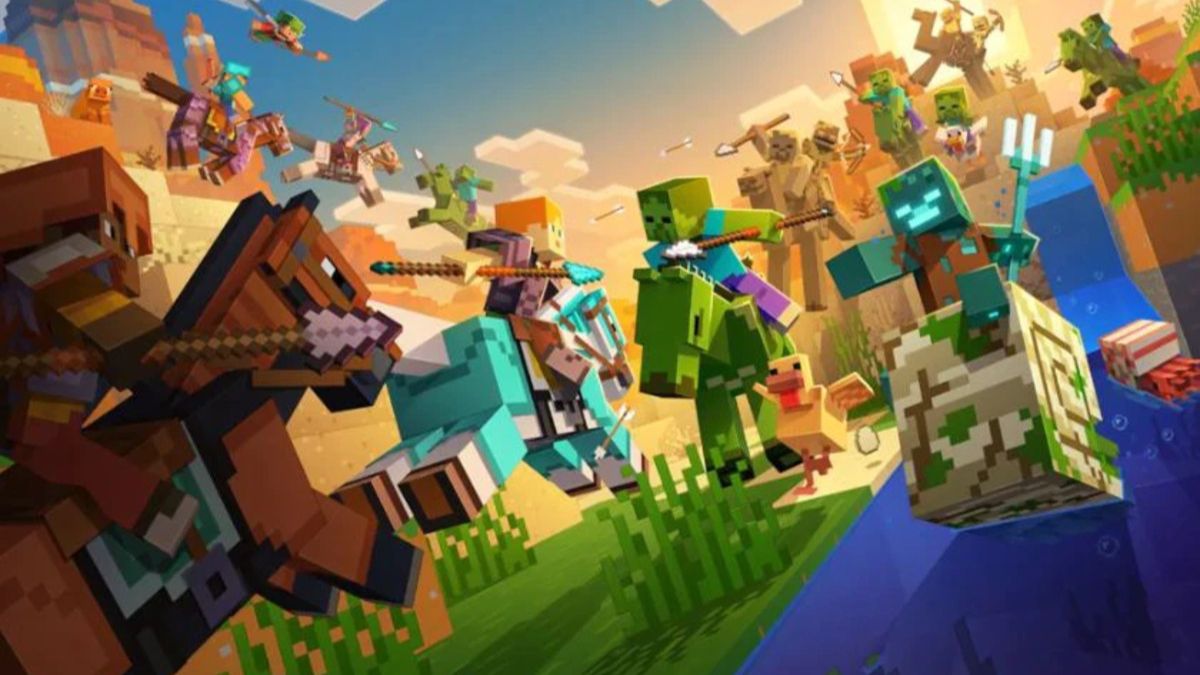

Minecraft: The Ultimate Beginner-to-Advanced Guide for Surviving, Building, and Mastering an Infinite World
Introduction to Minecraft Minecraft combines creativity, survival, exploration, and problem-solving inside an endlessly evolving world where every decision shapes a unique personal adventure. There’s a reason millions of players continue returning to Minecraft year after year. It isn’t because the game constantly tells players what to do. It’s because it quietly asks a much more powerful question: “What kind of world do you want to create?” That question changes everything. For some players, Minecraft becomes a peaceful escape where they build enormous cities beside oceans and mountains. For others, it transforms into a survival challenge filled with dangerous caves, hostile creatures, and tense nighttime exploration. And for many people in the United States, Minecraft eventually becomes something surprisingly personal — a digital world shaped by memories, mistakes, creativity, and long-term progress. At first glance, Minecraft may appear simple. Blocks. Tools. Basic graphics. But after a few hours, players begin discovering something deeper beneath the simplicity: Minecraft is not just about survival. It’s about learning how to adapt, experiment, recover from failure, and slowly turn imagination into something tangible. That emotional freedom is exactly why the game remains timeless. Deep Analysis: Why Minecraft Continues Dominating Gaming Culture Most games guide players carefully from one objective to the next. Minecraft takes the opposite approach. It gives players almost complete freedom immediately. That freedom creates uncertainty at first. But eventually, uncertainty transforms into possibility. Players can: build massive structures, survive harsh environments, explore endless caves, automate systems, create farms, experiment with engineering, or simply wander without pressure. This flexibility creates unusually strong emotional ownership. Players don’t just remember “playing Minecraft.” They remember *their* worlds. That distinction matters psychologically. According to gaming engagement studies, sandbox experiences that encourage player-generated creativity produce stronger long-term emotional attachment than heavily scripted experiences [Source: Newzoo, 2025]. Minecraft demonstrates this principle perfectly. The game world becomes meaningful because players shape it themselves. A small wooden shelter built during a terrifying first night often becomes more emotionally memorable than entire cinematic campaigns in other games. Why? Because players earned that moment personally. The Emotional Psychology Behind Minecraft’s Endless Appeal One reason Minecraft resonates across generations is because it balances safety and danger extremely well. During daylight, the world feels calm and inviting. At night, survival suddenly becomes uncertain. This emotional contrast creates tension naturally. Players constantly move between: creativity, exploration, preparation, and survival. That shifting emotional rhythm prevents the experience from becoming repetitive. Minecraft also rewards curiosity remarkably well. The players who progress fastest are often the players willing to: explore unfamiliar areas, experiment with mechanics, risk failure, and learn through mistakes. This creates a learning loop based on discovery rather than instruction. And discovery feels emotionally rewarding because it creates surprise. Practical Tips for Surviving and Improving Faster One of the most important beginner lessons in Minecraft is understanding priorities. New players often focus too heavily on aesthetics early while ignoring survival fundamentals. Experienced players usually prioritize: shelter, food, tools, resource gathering, and safe storage first. Preparation matters enormously. Another major mistake beginners make is exploring too aggressively without planning return routes or backup supplies. Veteran players rarely travel long distances without: coordinates, extra food, emergency tools, or navigation strategies. Minecraft rewards caution — but not fear. The best players balance preparation with curiosity. Efficient inventory management also becomes increasingly important later in the game. Organized storage systems save enormous amounts of time and reduce unnecessary frustration during larger projects. Storytelling Through Exploration and Survival One fascinating aspect of Minecraft is how naturally it creates personal stories. The game rarely forces dramatic moments artificially. Instead, stories emerge organically: escaping dangerous caves, surviving near-death situations, discovering hidden villages, losing valuable resources, or finally completing enormous projects after weeks of work. These moments feel meaningful because they belong entirely to the player. The world itself becomes a memory map. Players remember: where they built their first shelter, where they got lost, where they found rare materials, and where disaster struck unexpectedly. That emotional personalization explains why Minecraft worlds often feel difficult to abandon even years later. The game quietly transforms virtual environments into emotional history. Source: Why Sandbox Games Create Stronger Emotional Attachment The Psychology of Exploration and Creativity in Gaming How Open-Ended Games Changed Modern Game Design The Rise of Creative Survival Experiences in Gaming Why Emergent Gameplay Creates Lasting Player Memories Another reason Minecraft continues thriving is because no two players experience it exactly the same way. Some players focus entirely on architecture. Others become survival experts. Some build automated systems. Others explore endlessly. This flexibility allows the game to evolve alongside the player rather than becoming obsolete after completion. Expert Insights and Common Mistakes Players Make One of the most common beginner mistakes is underestimating environmental danger. Lava, fall damage, hostile mobs, and poor preparation often punish careless players quickly. Experienced players understand survival depends more on awareness than aggression. Another mistake involves rushing progression too aggressively. Many new players focus only on reaching late-game content immediately. Veteran players often appreciate slower progression because Minecraft’s emotional strength comes largely from discovery and experimentation rather than speedrunning objectives. A third major issue is fear of failure. Some players avoid exploration entirely because they fear losing resources. Ironically, those players often learn slower than players willing to take calculated risks. Minecraft rewards resilience remarkably well. Most setbacks become valuable lessons later. The Advanced Perspective: Minecraft as a Creative Thinking Simulator At a deeper level, Minecraft functions almost like a digital creativity laboratory. Players constantly solve problems: How should resources be organized? What’s the safest route? How can structures become more efficient? Which designs work best? These systems encourage adaptive thinking continuously. Minecraft also supports iterative creativity. Very few impressive builds emerge perfectly on the first attempt. Players experiment, fail, adjust, and improve gradually. This mirrors real creative work surprisingly closely. That’s one reason Minecraft remains emotionally satisfying even after thousands of hours. The game rewards imagination without demanding perfection. Trends, Data, and the Future of Sandbox Gaming Minecraft’s long-term popularity reflects broader shifts happening across gaming culture. Modern audiences increasingly value: player freedom, creative expression, emergent storytelling, and long-term personalization. According to gaming analytics reports, sandbox games maintain exceptionally strong engagement because they encourage player ownership and replayability [Source: Statista, 2025]. Minecraft also thrives because it adapts naturally to modern content culture. Streaming platforms and video creators continuously reinvent the experience through: survival challenges, hardcore worlds, speedruns, massive builds, multiplayer roleplay, and creative experiments. The game constantly renews itself through community imagination. That flexibility gives Minecraft unusual longevity compared to more linear experiences. Comparing Minecraft to Other Survival and Sandbox Games Many survival games emphasize realism. Others focus heavily on combat or difficulty. Minecraft succeeds because it balances: creativity, accessibility, exploration, and survival simultaneously. Its visual simplicity actually strengthens imagination rather than limiting it. Another major difference involves emotional pacing. Some games create nonstop pressure. Minecraft allows: quiet exploration, peaceful building, slow progression, and reflective moments between danger. This emotional variety creates stronger long-term comfort and attachment. Minecraft also remains uniquely accessible. A child can enjoy simple building mechanics immediately. Meanwhile, experienced players can spend years mastering: advanced engineering, automation, large-scale survival, and technical systems. Very few games successfully support both simplicity and complexity this effectively. Reference: The Future of Open-Ended Sandbox Gaming How Creativity Influences Long-Term Player Retention Streaming Culture and the Growth of Survival Games Why Exploration-Based Games Remain Emotionally Powerful Problem Solving and Adaptive Thinking in Gaming Another important distinction involves emotional memory. Minecraft players rarely remember scripted objectives most vividly. They remember: unexpected disasters, successful recoveries, ambitious builds, terrifying cave encounters, and moments of discovery that felt completely personal. Those experiences create emotional ownership that linear games often struggle to replicate. Common Concerns and Misunderstandings Around Minecraft Some players initially assume Minecraft lacks depth because of its visual simplicity. In reality, the game contains layered systems involving: survival mechanics, resource management, environmental strategy, engineering, exploration, and creative architecture. Another misconception is that Minecraft becomes repetitive quickly. Experienced players often argue the opposite: the game becomes more interesting over time because player imagination expands continuously. There’s also concern among some players about “playing correctly.” Minecraft quietly rejects this idea. There is no single correct way to experience the game. Some players pursue efficiency. Others pursue creativity. Some prioritize exploration or multiplayer storytelling. That flexibility is precisely why the game remains emotionally timeless. Final Thoughts and What Comes Next Minecraft continues shaping gaming culture because it understands something many modern games forget: Players don’t only want objectives. They want ownership. Minecraft gives players space to: experiment, fail, rebuild, create, survive, and slowly transform unfamiliar worlds into something meaningful. That emotional progression feels deeply human. And perhaps that’s the real reason the game still resonates after all these years. Not because the graphics are realistic. Not because the mechanics are complicated. But because Minecraft quietly allows players to leave pieces of themselves inside the worlds they build. And once that happens, the experience stops feeling temporary. It starts feeling personal. References * Newzoo. (2025). *Sandbox Gaming Engagement and Retention Report*. * Statista. (2025). *Creative Survival Game Market Trends in North America*. * Psychology Today. (2024). *Exploration, Creativity, and Emotional Learning in Gaming*. * GameAnalytics. (2025). *Player Behavior Patterns in Open-Ended Sandbox Games*. * GamesIndustry.biz. (2025). *The Evolution of Creative Survival Experiences*.
Read more